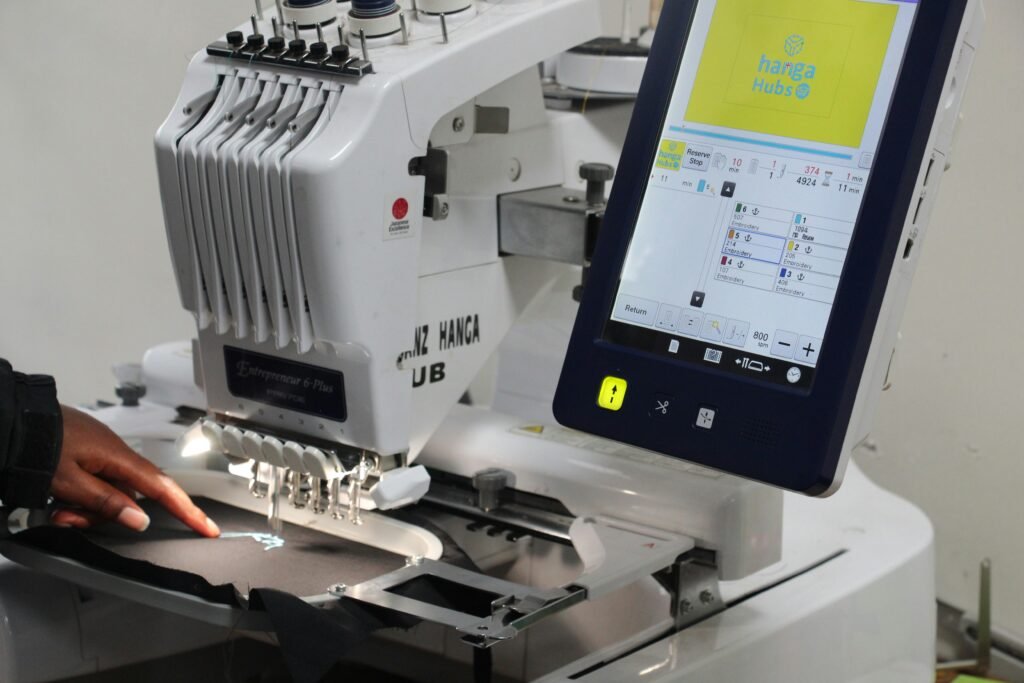
Machine embroidery can look intimidating at first—threads everywhere, stabilizers, hoops, settings, tension issues. But here’s the truth: beginners don’t fail because it’s hard. They struggle because they miss a few foundational rules.
This guide breaks down the best machine embroidery tips for beginners so you can skip the frustration phase and start creating clean, professional-looking embroidery right away.
What Every Beginner Should Know About Machine Embroidery
Machine embroidery is a combination of three key elements:
- Fabric
- Stabilizer
- Thread
If one of these is wrong, everything else suffers.
Think of it like baking: wrong ingredients = unpredictable results.
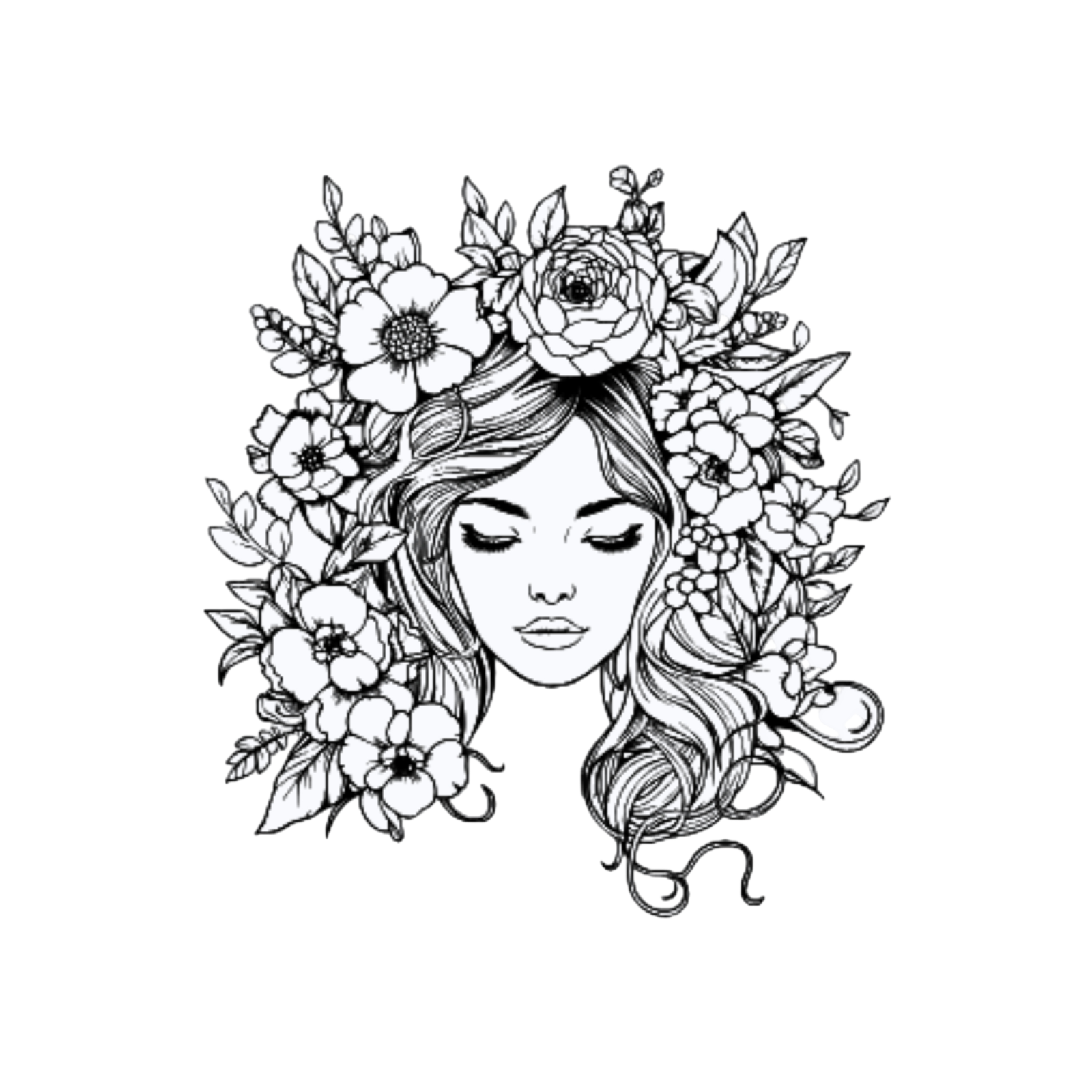
1. Start With Simple Designs (Not Complex Ones)
One of the most common beginner mistakes is starting too big.
Best beginner-friendly designs:
- Simple shapes
- Small logos
- Monogram letters
- Minimal stitch density patterns
Avoid:
- Highly detailed portraits
- Large full-fill designs
- Complex gradients
👉 Simplicity builds confidence and prevents early frustration.
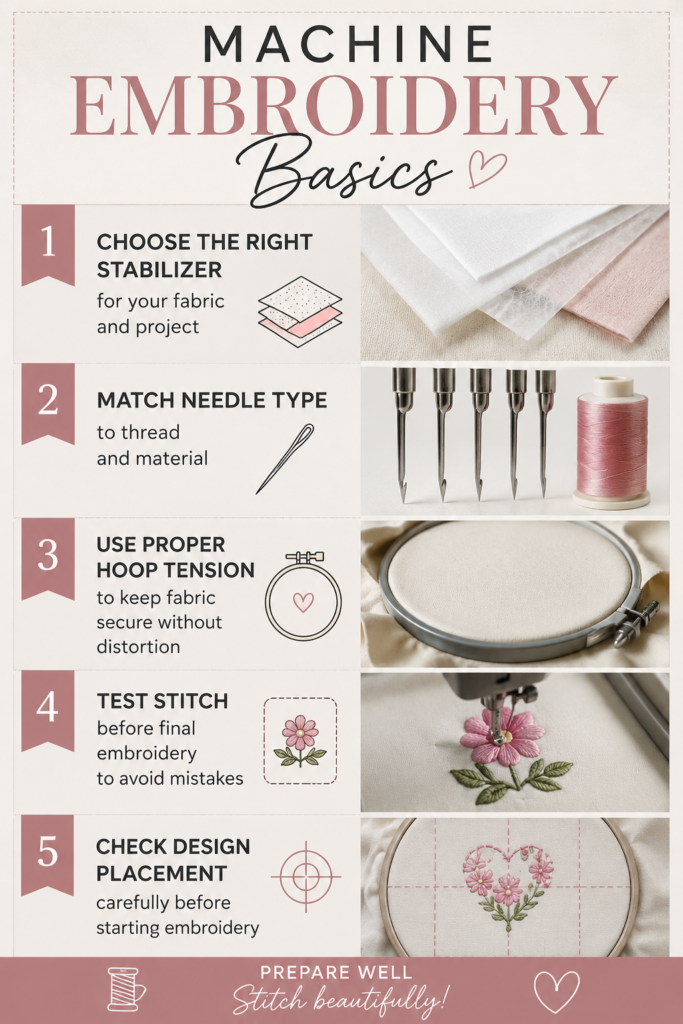
2. Always Use the Right Stabilizer
Stabilizer is the backbone of embroidery.
Beginner cheat sheet:
- Tear-away: stable woven fabrics
- Cut-away: stretchy fabrics (t-shirts, knits)
- Water-soluble: delicate or decorative fabrics
If your stitches look messy or uneven, stabilizer is usually the first problem to check.
3. Learn Proper Hooping Technique Early
Good hooping = 50% of embroidery success.
✔ Fabric should be smooth, not stretched
✔ Stabilizer must sit flat under fabric
✔ Everything should feel secure but not distorted
🚫 If it shifts inside the hoop, your design will shift too.
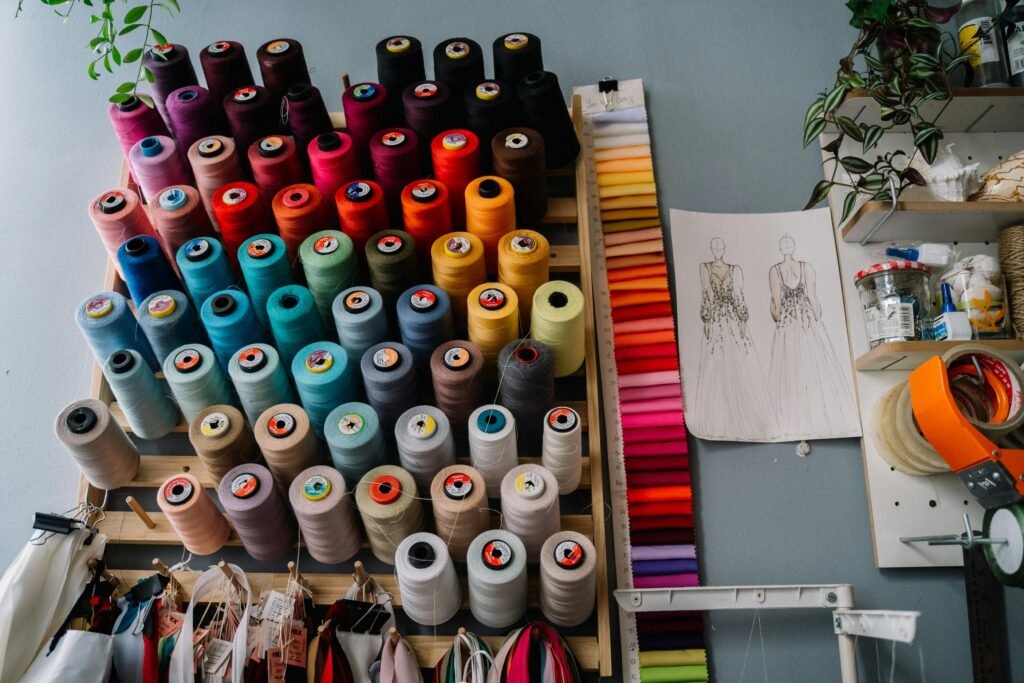
4. Use High-Quality Embroidery Thread
Cheap thread leads to:
- Constant breaking
- Faded colors
- Poor stitch quality
Recommended:
- Polyester embroidery thread (best all-around)
- Rayon thread (glossier, decorative use)
👉 Beginners should avoid “mystery bargain thread packs.”
5. Choose the Right Needle Size
Needles matter more than most beginners think.
- 75/11 embroidery needle: standard choice
- 90/14 needle: thicker fabrics
- Ballpoint needle: stretchy materials
Change your needle regularly—dull needles create unnecessary problems.
6. Slow Down Your Machine Speed
Fast stitching is not a beginner advantage.
Slower speed helps:
- Improve accuracy
- Reduce thread breaks
- Prevent fabric shifting
Think of it as learning to drive: speed comes later, not at the start.
7. Always Test Your Design First
Before stitching on your final fabric:
✔ Test on scrap fabric
✔ Use same stabilizer
✔ Use same thread type
This step saves fabric, time, and frustration.
8. Understand Basic Thread Tension
If your embroidery looks messy, tension might be the cause.
Signs of tension issues:
- Loops under fabric
- Tight pulling on top
- Uneven stitch lines
Fix:
- Re-thread machine completely
- Adjust upper tension slowly
- Check bobbin setup
9. Match Fabric to Design Complexity
Not all fabrics behave the same.
Beginner-safe combinations:
- Cotton + simple designs
- Polyester blends + light stitching
- Felt + decorative embroidery
Avoid early:
- Very stretchy fabrics
- Thin silk-like materials
- Very thick layered textiles
10. Keep Your Machine Clean (This Is Huge)
Lint builds up faster than beginners expect.
Clean regularly:
- Bobbin area
- Needle plate
- Thread path
A clean machine = fewer surprises mid-project.
Beginner Embroidery Troubleshooting Checklist
If something goes wrong, check in this order:
- Stabilizer choice
- Hooping tension
- Thread quality
- Needle type
- Machine tension
- Fabric compatibility
Most beginner problems are solved in the first three steps.
tips, embroidery thread types, machine embroidery basics, easy embroidery projects, embroidery troubleshooting for beginners
Final Thought
Machine embroidery isn’t about perfection on day one—it’s about understanding the basics well enough that your machine stops feeling unpredictable.
Once these fundamentals click, everything becomes easier, cleaner, and honestly a lot more fun.